
Once invoices are out in the world, Hubflo gives you a central place to track everything, what's been paid, what's overdue, and what still needs your attention.
Where to find your invoices
Hubflo automatically links every invoice to the relevant contact, workspace, and project, so you can always find it from wherever you're working, without having to search.
Contact record → open a contact → go to the Billing tab
Client workspace → open the workspace → go to the Billing tab
Project → open the project → go to the Billing tab
As long as the invoice is linked to a contact, Hubflo takes care of showing it in the right place.
Actions you can take on an invoice
From Billing > Invoices, you can:
View all invoices
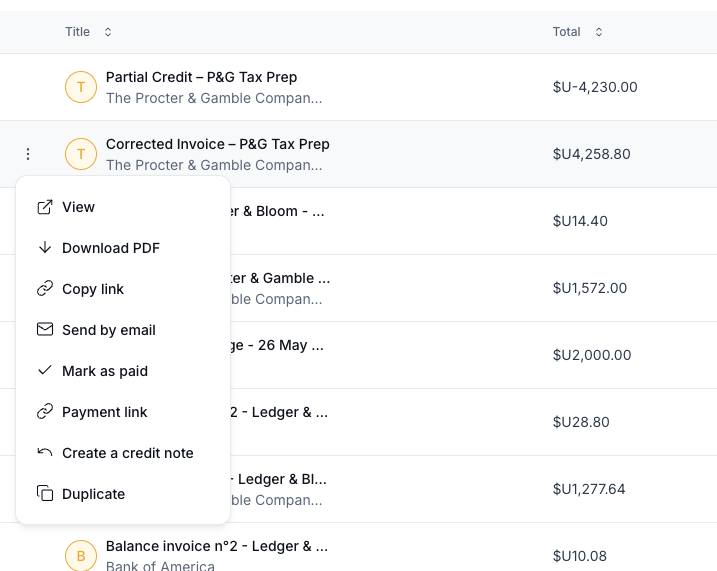
Click the three dot menu on any invoice to see available actions:
Filter & search
Use the filters at the top right of the Invoices section to narrow down your view by:
Date issued
Date paid
Contact
With or without a credit note
Sort by proposal status
Use the tabs at the top to filter by status:
Tab | What it shows |
Draft | Invoices you've created but not yet issued |
Issued | Invoices sent to clients, awaiting payment |
Overdue | Issued invoices past their payment due date |
Paid | Invoices that have been fully paid |
Cancelled | Invoices that have been voided. Note: you cannot delete or archive invoices. |
Recurring | All active recurring invoice schedules |
Set up reminders
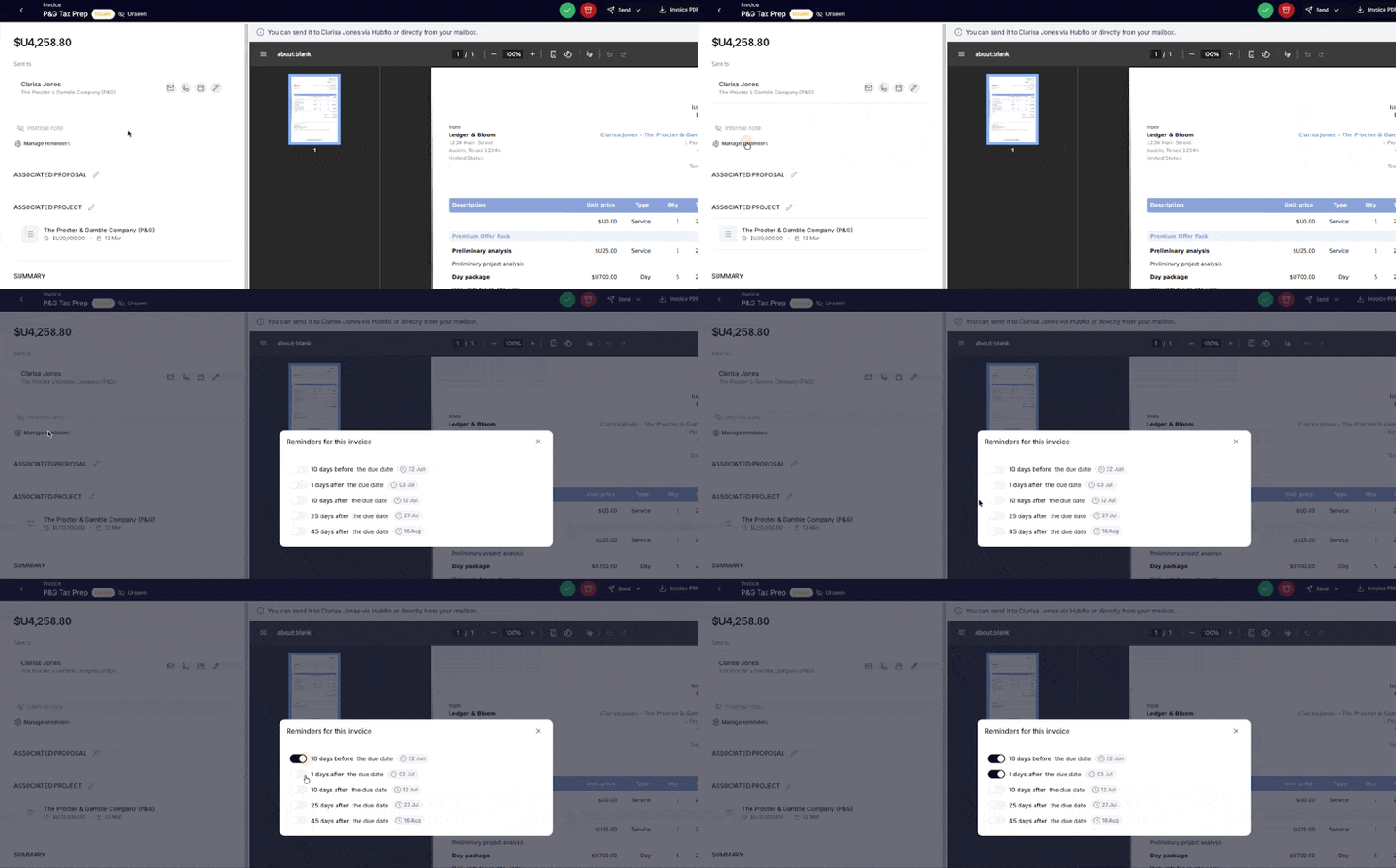
For invoices that are still pending, you can turn on automated follow-up emails for clients:
Open the invoice.
Click Manage Reminders in the left sidebar.
Toggle reminders on or off.
See summary and timeline
When you open an invoice, you'll find a summary panel and a timeline on the side:
Summary
Total (excluding tax)
Total costs
Margin (in dollars and as a percentage)
Time logged
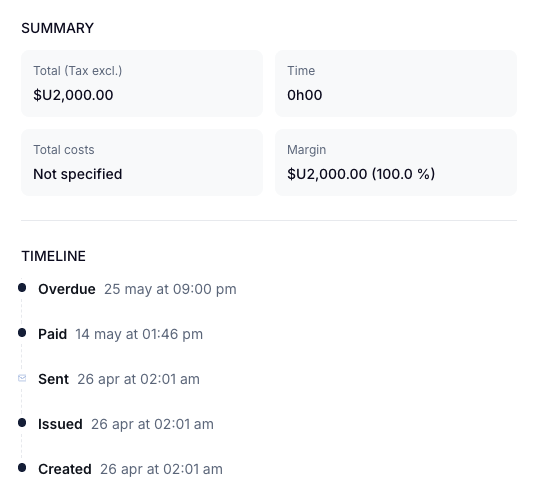
Timeline
A running log of the invoice's history, when it was created, issued, paid, and any other status changes, each with a timestamp.